Seven wholesale grades of true cinnamon.
Every quill is graded at origin by thickness, tone and aroma. Scroll to explore each export grade — from the rarest Alba cut to the bold M2.
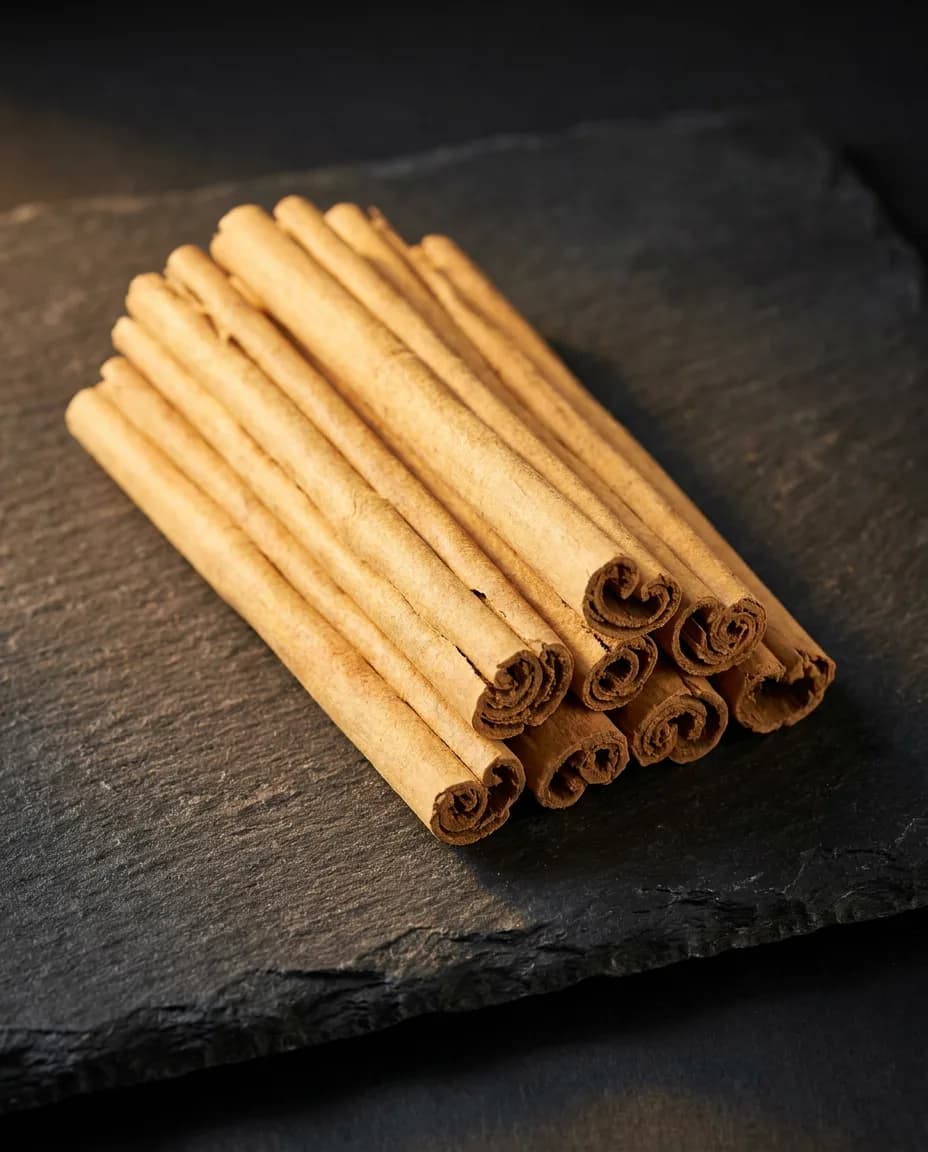
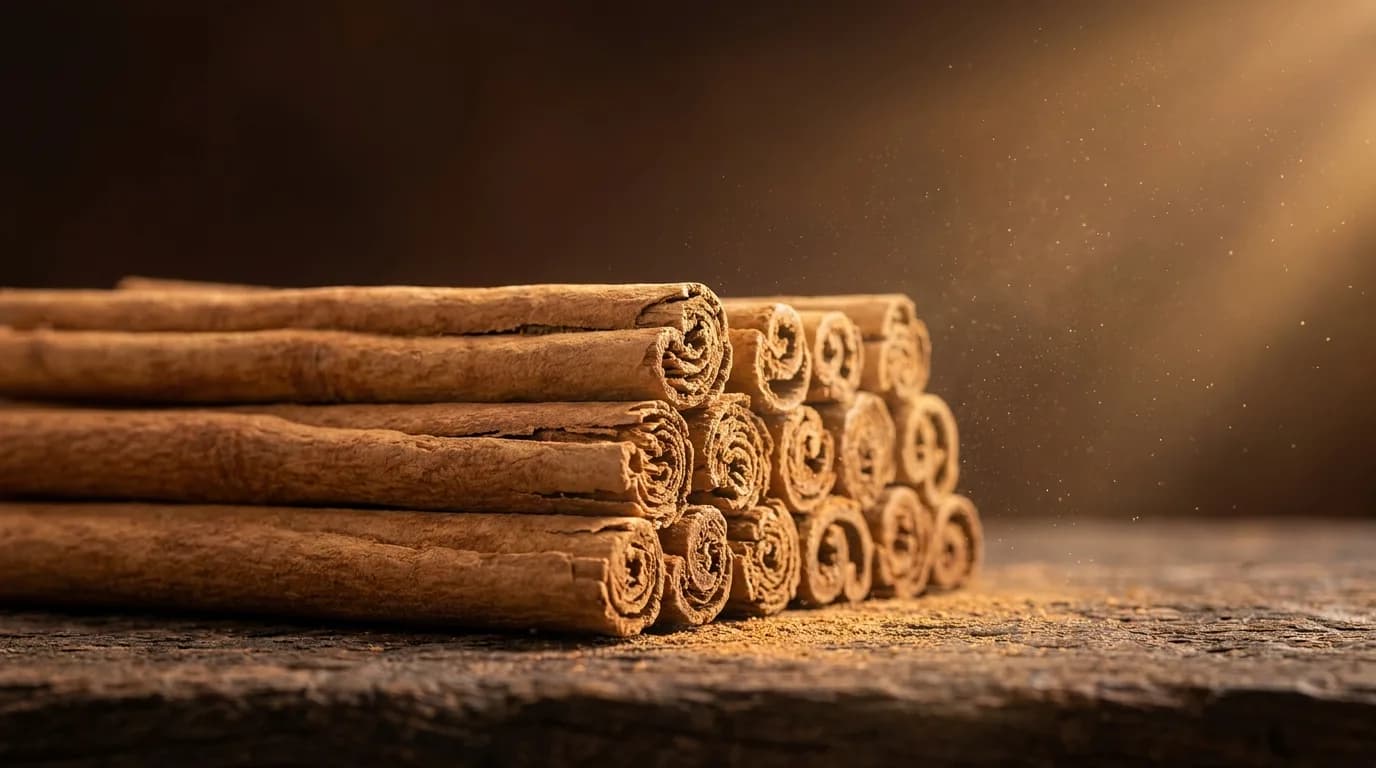
Alba
Ultra-Premium Selection
The highest and most exclusive grade of true Ceylon cinnamon. Exceptionally thin, smooth quills with a light golden tone deliver a delicate sweetness and a beautifully refined aroma — luxury cinnamon crafted for gourmet kitchens, premium gifting and the world's finest spice markets.
Keep scrolling to explore each grade
Grade specifications at a glance
The seven export grades of true Ceylon cinnamon are Alba, C4, C5, H1, H2, M1 and M2. Grades are classified at origin by quill diameter, appearance and aroma, following Sri Lankan grading conventions (SLS 81).
| Grade | Typical max quill diameter | Profile | Typical use |
|---|---|---|---|
| Alba | ≤ 6 mm | Ultra-Premium Selection | Fine retail, gifting, premium tea blends |
| C4 | ≈ 10 mm | Premium Export Grade | Premium retail & fine food production |
| C5 | ≈ 12 mm | Classic Ceylon Quality | Everyday premium cooking, volume supply |
| H1 | ≈ 16 mm | Bold & Aromatic Grade | Roasting, blending, flavour-led manufacturing |
| H2 | ≈ 19 mm | Rich Flavour for Versatile Use | Grinding & extraction |
| M1 | ≈ 14 mm | Balanced & Elegant Grade | Balanced culinary use |
| M2 | ≈ 16 mm | Authentic & Economical Choice | Blends & powder production at scale |
Diameters are indicative, per SLS 81 grading conventions. Volatile oil content, moisture and cut length are confirmed per lot on the Certificate of Analysis.
Wholesale terms
- Wholesale only — typically from one 25 kg export carton per grade; mixed-grade consolidation possible
- Samples (100–250 g) available to any registered business, from independent tea shops to manufacturers
- Priced FOB Sri Lanka; CIF and other terms on request
- Typical lead time 2–4 weeks; certificates of origin, phytosanitary and analysis per lot
- Custom quill lengths, custom packing (including tea bags and tea packs) and sulfur-free processing for naturality-focused markets
The full grade catalogue
Alba
Ultra-Premium Selection
Exceptionally thin, smooth quills with a light golden tone — delicate sweetness for gourmet kitchens and premium gifting.
C4
Premium Export Grade
Elegant quill formation and rich natural fragrance — for upscale culinary use, tea blends and premium retail.
C5
Classic Ceylon Quality
Slightly thicker quills with smooth sweetness — ideal for everyday luxury cooking, baking and infusions.
H1
Bold & Aromatic
Robust quills with a deep, warming aroma — for strong infusions, extracts and premium powder production.
H2
Rich & Versatile
Thicker bark with full-bodied aroma and strong flavour release — ideal for grinding and spice manufacturing.
M1
Balanced & Elegant
Medium thickness with naturally sweet fragrance — versatile across retail, wholesale and value-added products.
M2
Authentic & Economical
Thicker quills with bold cinnamon character — reliable for blends, powder and commercial use.
Buyer questions, answered
What is the coumarin content of Ceylon cinnamon vs cassia?
True Ceylon cinnamon (Cinnamomum verum) contains only trace coumarin — typically around 0.02 g/kg — while cassia can carry up to 1 g/kg, roughly fifty times more. The difference matters because EU Regulation (EC) No 1334/2008 Annex III caps coumarin in specific foods: 50 mg/kg in traditional seasonal bakery ware, 20 mg/kg in breakfast cereals and 5 mg/kg in desserts, while EFSA's tolerable daily intake is 0.1 mg per kg of body weight. A cassia-based recipe can approach those ceilings at normal culinary dosing; with Ceylon, the same recipe sits far below them. For producers of bakery goods, cereals, desserts or children's products, specifying Ceylon effectively removes coumarin as a compliance concern.
How do I verify quills are true Cinnamomum verum?
Check the bark first. True Ceylon quills are rolled from many paper-thin layers of inner bark — a cut cross-section looks like a rolled cigar — while cassia is a single thick curl. Ceylon is light tan-gold and brittle enough to snap cleanly; cassia is darker reddish-brown, hard and woody. The aroma is delicate and sweet rather than sharp. Then check the paperwork: ask for a certificate of origin from Sri Lanka, a phytosanitary certificate and a certificate of analysis issued per lot, with grading to the Sri Lankan SLS 81 standard (Alba through M2). Every GOATS World shipment carries this documentation, and 100–250 g samples let you run the physical checks before ordering.
What is the MOQ, and can grades be mixed in one shipment?
The minimum order is deliberately accessible: typically one 25 kg export carton per grade, with mixed-grade consolidation possible in a single shipment — so a buyer can combine, for example, one carton of Alba with one of C5. Before committing, samples of 100–250 g per grade are available to any registered business, from an independent tea shop to an industrial manufacturer. Quotations are prepared FOB Sri Lanka (CIF on request), and the typical lead time from confirmed order to export is 2–4 weeks. Exact minimums, prices and consolidation options are confirmed in your individual quotation.
Which grade should I choose for my application?
Match quill diameter to use. Alba (≤ 6 mm) is the thinnest and rarest — for fine retail, gifting and premium tea blends where presentation carries the price. C4 (≈ 10 mm) and C5 (≈ 12 mm) are the classic premium culinary grades for upscale retail and fine food production. M1 (≈ 14 mm) balances cost and elegance for versatile culinary use. H1 and M2 (≈ 16 mm) and H2 (≈ 19 mm) are the boldest and most economical — the standard choices for grinding, extraction and large-scale blends, where aroma per franc matters more than appearance. If in doubt, order samples of two or three neighbouring grades: the right answer is often one grade thicker, and cheaper, than buyers first assume.
What documentation ships with each order?
Each order ships with a certificate of origin and a phytosanitary certificate. Certificates of analysis and organic cultivation documentation are available where applicable.
Do you ship CIF/DDP to the EU, or only FOB Sri Lanka?
Quotations are prepared on FOB Sri Lanka basis as standard. CIF and other delivery terms can be arranged on request depending on destination and volume.
Can I order samples before a bulk purchase?
Yes — samples of typically 100–250 g per grade are available to any registered business, from independent tea shops to industrial manufacturers, before committing to a bulk order.
What is the shelf life and recommended storage?
Stored airtight, cool and dry, whole quills typically keep their aroma for 2–3 years. Ground cinnamon is best used within 6–12 months of milling.
Do you offer sulfur-free processing or customized quills and packing?
Yes. Quills can be supplied with sulfur fumigation for long-term storage, or entirely sulfur-free for naturality-focused markets. Quill length and packing are customizable per buyer — including tea bags and tea packs for tea cut, and glass containers with customized volumes for bark and leaf oils.